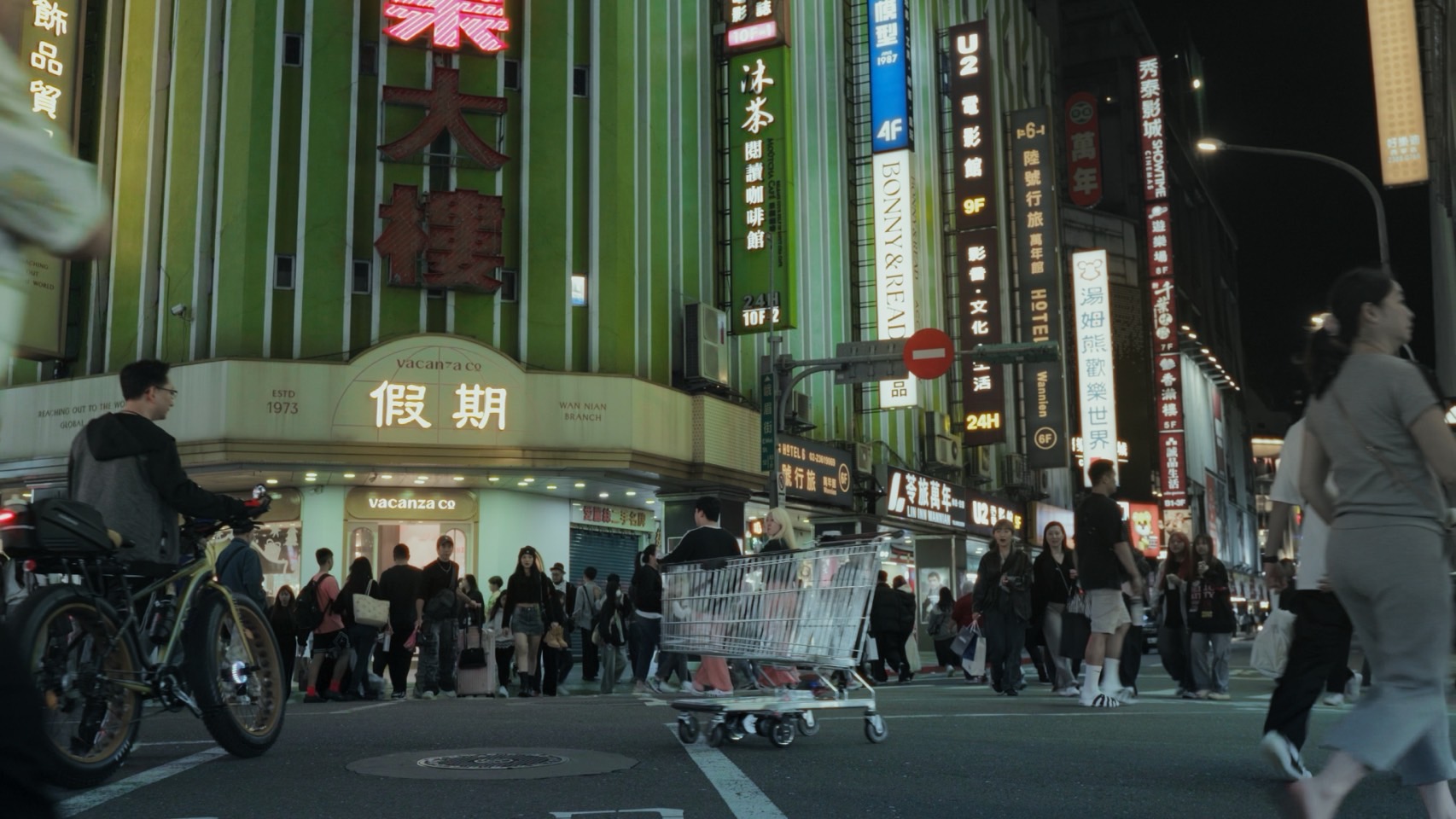
Late nights should be for dreams and rest; however, under the grip of contemporary capitalism, they are hijacked by stores that stay open around the clock and by late-night online ad pushes, turning insomnia and feelings of emptiness into quantifiable impulse purchases. As Jonathan Crary asserts in 24/7: Late Capitalism and the Ends of Sleep, capitalism has an insatiable desire to commodify sleep, and dark nights are progressively devoured by the relentless operation of the “24/7” cycle.
24/7 Ever-Opening Hours opens as a video screened on the plaza of MoCA TAIPEI, with Video Art Guerrilla treating the outdoor TV wall as a giant interface of contemporary consumer society, exposing the latent visual power that the commercial world possesses. The monitor’s original purpose is to serve as a medium for communication, and by showing fragmented, interruption-based videos, the consumer world’s visual power is further highlighted. With images displayed on the streets, among pedestrians, or inside shops, it may be difficult for passersby to distinguish whether they are “advertisements” or “art.” Thus begins an urban game of shuffling between boundaries.